Category: Illustration

  • The Big Green is Here!

    The Big Green is Here!

    African children’s stories in mainstream northern hemisphere publishing often focus on landmarks or animals, in the same way that picture books from India tend to be more about festivals than anything else, or Eastern European books tend to be more about folktales…

    You could be forgiven for thinking that everyday life doesn’t happen in these parts of the world.

    But it does.

    Northern hemisphere publishing dominates. For the longest time readers in the northern hemisphere didn’t need or want to read different perspectives, but that hasn’t been changing for the last few decades as the ideas of ‘choice’ and ‘variety’ itself have evolved into more opportunity and profit. Publishers are still testing new ways to reach more readers, it’s fair to say, but they aren’t really keeping up with what readers want as a result.

    I have been focusing more and more on telling stories about Africans, also testing the best ways to get readers of all backgrounds interested.

    I felt ‘The Big Green’ could be a way to tell a story about African people, especially as it has a climate change theme to build the story on. The story takes place against the backdrop of the Great Green Wall of Africa initiative, a 30 year undertaking nearing its end in 2030.

    Putting a story like this together for a potentially wide audience is full of compromises and pitfalls, especially where authenticity is concerned. It took a lot of thinking and discussion to find the balance.

    Cover image- The Big Green

    as an African, I don’t represent a whole continent and its people, nor should I shoulder that responsibility. But in the countries at the edge of the Sahara desert, like Mali, climate change isn’t just a headline — it’s daily life. But so is resilience, community, hope and joy. That’s at the heart of ‘The Big Green’.

    I think about people I know who love tress and plants, who care about climate change, and who are from that part of the world and hope this book celebrates them as intended.

    🙂

    The Big Green is available in all good bookstores.

    UK Bookshop

  • Amazing Aqua Boy!

    Amazing Aqua Boy!

    30 years ago, my first books were published. It’s a milestone I never thought about till now.

    I didn’t imagine how long I would be creating books. I only ever thought about making the next one better than the last.

    That’s not to say I don’t dream of writing and illustrating forever! I’m a dreamer, and proud. There is always an understanding that dreams don’t always come true, nor they aren’t the same as clear plans or purpose. But they are important. Letting a dream go can be devastating, so learn to hold on to them for use later.

    Dreams are the gold by which creatives make their living, combined with a way of turning them into reality that is unique to each of us. Publishing is, on some level, harnessing those dreams and turning them into products.

    A few years ago Astro Girl was published to wide acclaim. Its been doing well since in all the places its published. It was followed by Eco Girl and all of a sudden I had two books about global topics that young children can understand. That was a dream come true!

    So its with enormous pride and excitement that I introduce to you the next book in the series – Aqua Boy!

    photo of Aqua Boy cover

    This story is all about life below water and how we should be paying more attention to it. In it, young Aaronfinally gets to do something brave because of his new friend from the ocean.

    All of a sudden this is a series.

    Astro Girl (US) (UK), Eco Girl (US) (UK)and Aqua Boy are available at all cool bookstores. My thanks to the UK Publishers, Otter Barry Books, US publishers Candlewick, two amazing teams of people.

  • Old is new again

    Old is new again

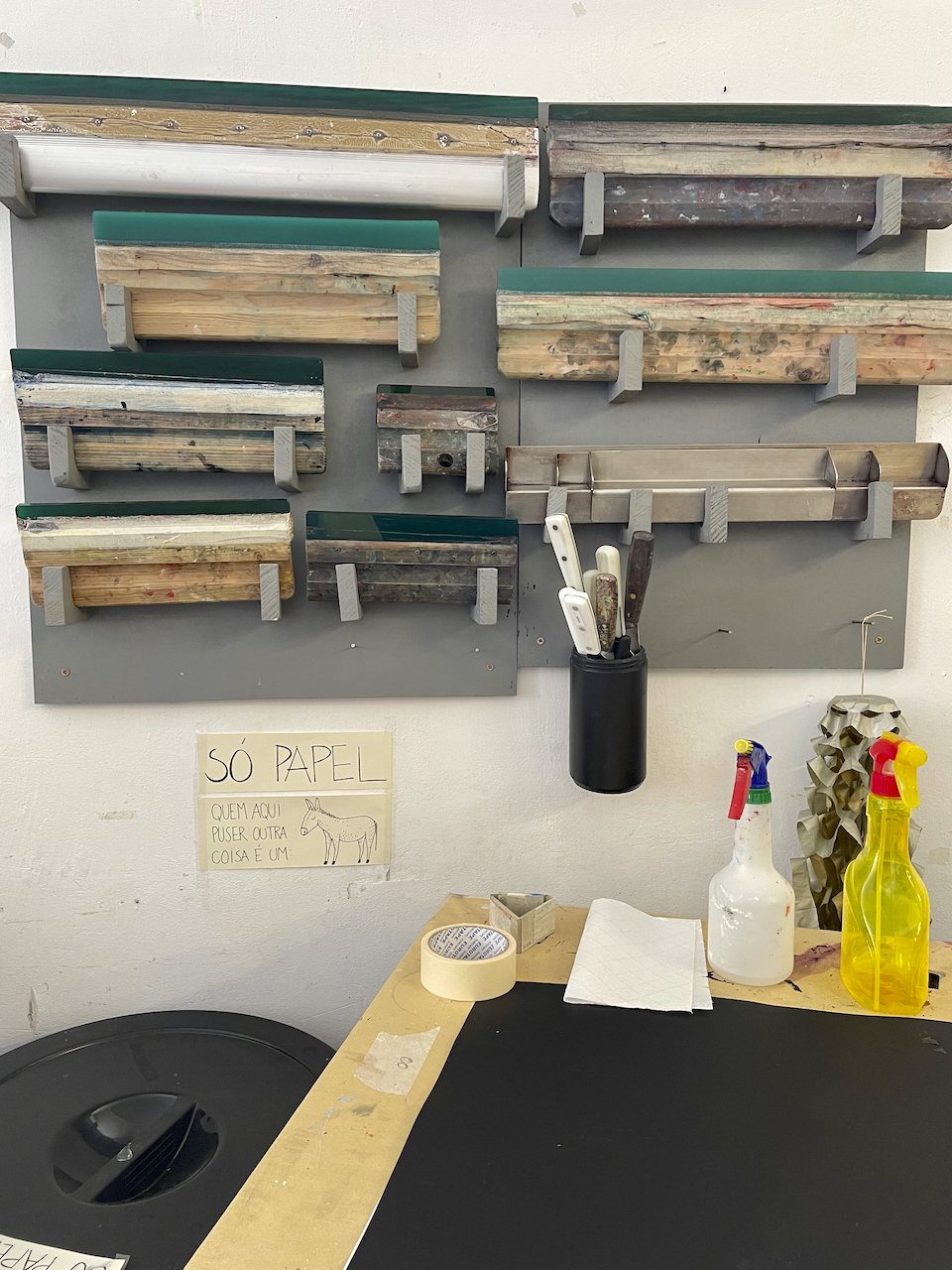
    I came across Officina do Cego, run by a group of crafts and art people in Lisbon, thanks to Kristine Martinova. She introduced us to the president of the Association, Nuno Ramos, who explained how they teach and make work using screen and letterpress printing. They make their own books, so also teach bookbinding.

    Walking into the place I found machines that fondly reminded me of my early days in graphic design. I started young, around 15 years old, working during school holidays in the Maviyane Project.

    These were the days before computers in the office and we did all the artwork by hand. I mean, totally by hand. We traced letters to make layouts and stuck things down with hot wax. We calculated the size of type that would work for a book using a formula and then sent that to the typesetters who sent us back rolls of text on photographic paper. If it wasn’t right the whole process had to be done again, causing delays, among other things. Attention to detail meant a lot more than it does now- it could end a project, or worse still a job.

    We carried all of that experience to the computer age, thankfully.

    It was a wonderful trip down memory lane.  I might take one of their courses next time. 

  • Nursery Rhymes

    An on going set of nursery rhymes, hand lettered, or hand painted. The idea is that children and parents will focus on the words a little more.
    Prints are available; A3 digital archive print- £35.00 ($45.00) plus postage and packing

    [a_gallery]

  • Urbanation; Words from the Street- Aikona

    Aikona = Never, Not on your life.

    Imagine that you are out on the town in Capetown and you get to a posh club in you jeans and T-shirt. The bouncer, known as ‘The Pope’  stands between you and heaven, if he give you his blessing. He looks you up and down and says “Aikona.”  Night over!


  • Out of time

    picture of a woman sitting on a train

    I was sitting on a train when a striking woman walked and sat down.  I started a to draw, picking up the obvious things first. Two stops later she got off. I should have finished the picture off later as I had made enough of a mental note. but for some reason that didn’t happen and I suspected that I had captured enough of this woman’ presence. My question: Is it enough to capture the essential first impression of a subject?  Weeks later when I look at the image I can clearly remember the details I wanted to add to finish the image and strangely enough it feels satisfying because of that. I’ve tried to do this with photography for a several years. It’s quite ‘easy’ to achieve with a drawing, which ultimately has more possible outcomes, but I am struggling with the camera.